National Stuttering Awareness Day: You Can Get Better
On National Stuttering Awareness Day, here is what most organizations will never tell you — adults who stutter can get significantly better, especially if you already speak more fluently when alone.
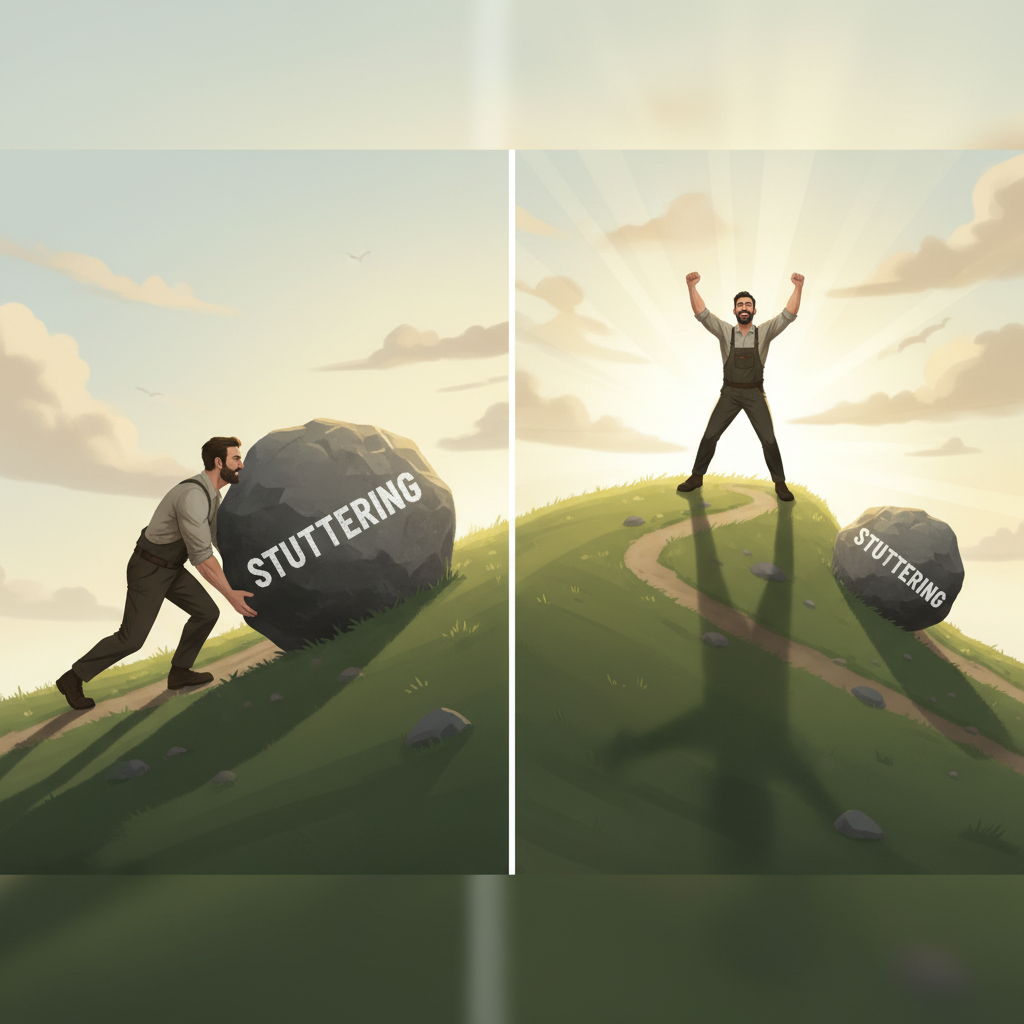
Today is National Stuttering Awareness Day — October 22nd — and I want to say something that most organizations, therapists, and well-meaning advocates will not say loudly enough:
You can get better. Significantly better. And if you already speak more fluently when you are alone, that is one of the most important signs that you can.
Mainly because you cannot have a true disability based on your location or on who is in the room with you. A man with a limp, limps in every room of his house no matter who is there. He cannot go into a room alone and walk perfectly. It is a true disability. But if you can speak better when you are alone, then theoretically there is nothing wrong with you. That is a hard concept for people to grasp who have believed for many years that there is something wrong with them.
I have worked with many, many adults who stutter over the course of my career. And one of the things that frustrates me most is how rarely people who stutter hear this simple, honest message. Instead, they are told to "manage" their stutter. To "accept" it. To "cope." To not be embarrassed and to join support groups where everyone shares the same struggle, but no one is told there is a real path forward.
That is not good enough. Not on National Stuttering Awareness Day. Not on any day.
What Most Organizations Are Not Telling You
The National Stuttering Association, the Stuttering Foundation, and many speech-language pathologists do important work. I respect them. But there is a message that gets lost in the conversation around stuttering awareness — and it is the most important one:
Stuttering is not a life sentence.
One of my most successful cases recently is a man who was engaged to, and is now married to, a woman who is a speech therapist — an SLP. As much as she would have liked to help him, she was unable to. He finally married her because of our work together. He was able to say his vows without stuttering. That is what had been holding him back from getting married — the fear of stuttering during his wedding ceremony. You can see his video on my website at stopstutteringnowgurian.com.
Most awareness campaigns focus on acceptance and reducing stigma, which matters. But acceptance without hope is not enough. People who stutter deserve to know that real, lasting improvement is possible — not just better coping strategies, but actually speaking more freely and confidently in the situations that matter most to them.
The fact that this message is not front and center on National Stuttering Awareness Day is something I think about every year.
The Single Most Important Clue
Here is something I want you to think about right now.
Do you speak more fluently when you are alone? When you are talking to yourself, singing in the shower, speaking to a pet, an infant, or rehearsing something out loud in an empty room — do the words come out more easily?
If the answer is yes, that is not a coincidence. That is not just a quirk. That is one of the most significant indicators that your stuttering has a strong cognitive and psychological component — meaning it is being driven, at least in part, by what is happening in your mind when you anticipate speaking to another person. You actually become the age you were when you first started stuttering.
And because it has a cognitive and psychological component, it can be addressed through cognitive work.
This is the foundation of the approach I use with my clients. It is not about teaching you tricks to hide your stutter. It is not about slowing down your speech or using a metronome. It is about reprogramming your mind, and understanding why your brain and body respond differently when you are alone versus when someone is listening — and then systematically changing that response. Stuttering is situational.
Why You Have Not Heard This Before
There are a few reasons why this message does not get through to most people who stutter.
First, the research community is cautious. Scientists and clinicians are trained to be conservative. They do not want to overpromise. So they say things like "stuttering cannot be cured" — which is technically true in the sense that there is no pill or surgery — but that framing leaves people feeling hopeless when they do not need to.
Second, the support community is focused on acceptance. Again, this is valuable. Reducing shame around stuttering is important. But acceptance and improvement are not mutually exclusive. You can accept yourself fully AND work toward speaking more freely. One does not cancel out the other.
Third, most people who stutter have already tried things that did not work. Speech therapy as a child. Breathing exercises. Fluency devices. And when those things did not produce lasting results, they concluded that nothing would. That conclusion is understandable — but it is wrong. And it causes people to lose hope.
The cognitive approach is fundamentally different from what most people have tried. And for many adults, it produces results that nothing else has. It is a gradual change that is long-lasting.
What National Stuttering Awareness Day Should Mean
I believe National Stuttering Awareness Day should be about more than awareness. It should be about possibility.
It should be the day when someone who has been stuttering for twenty years finally hears — maybe for the first time — that there is a path forward. That the fluency they experience when they are alone is not a cruel joke. It is evidence. Evidence that their brain already knows how to produce fluent speech. The work is in learning to access that fluency when it matters most.
If you are reading this today, I want you to hear that message directly from me. This is the technique I developed to cure myself so many years ago.
You are not broken. You are not stuck. And you do not have to spend the rest of your life managing something that can actually get better.
A Free Conversation to Start
I offer a free 20–30 minute online consultation to adults who stutter who want to understand whether the cognitive approach might be right for them. There is no pressure, no sales pitch — just an honest conversation about where you are and what might be possible.
If October 22nd — National Stuttering Awareness Day — is the day you finally decide to explore what is possible, I would be honored to be part of that conversation.
Reach out to me directly at jeffrey@jeffreygurian.com or visit stopstutteringnowgurian.com to learn more and schedule your free consultation.
You deserve to know that getting better is possible. Today is a good day to start believing it.
Dr. Jeffrey Gurian is a cognitive therapist based in New York City who has worked with many, many adults who stutter over the past 20 years. He is the author of multiple books on happiness, healing, and personal transformation.
Explore Topics
Written by
Dr. Jeffrey Gurian
Content creator and writer sharing insights and stories.